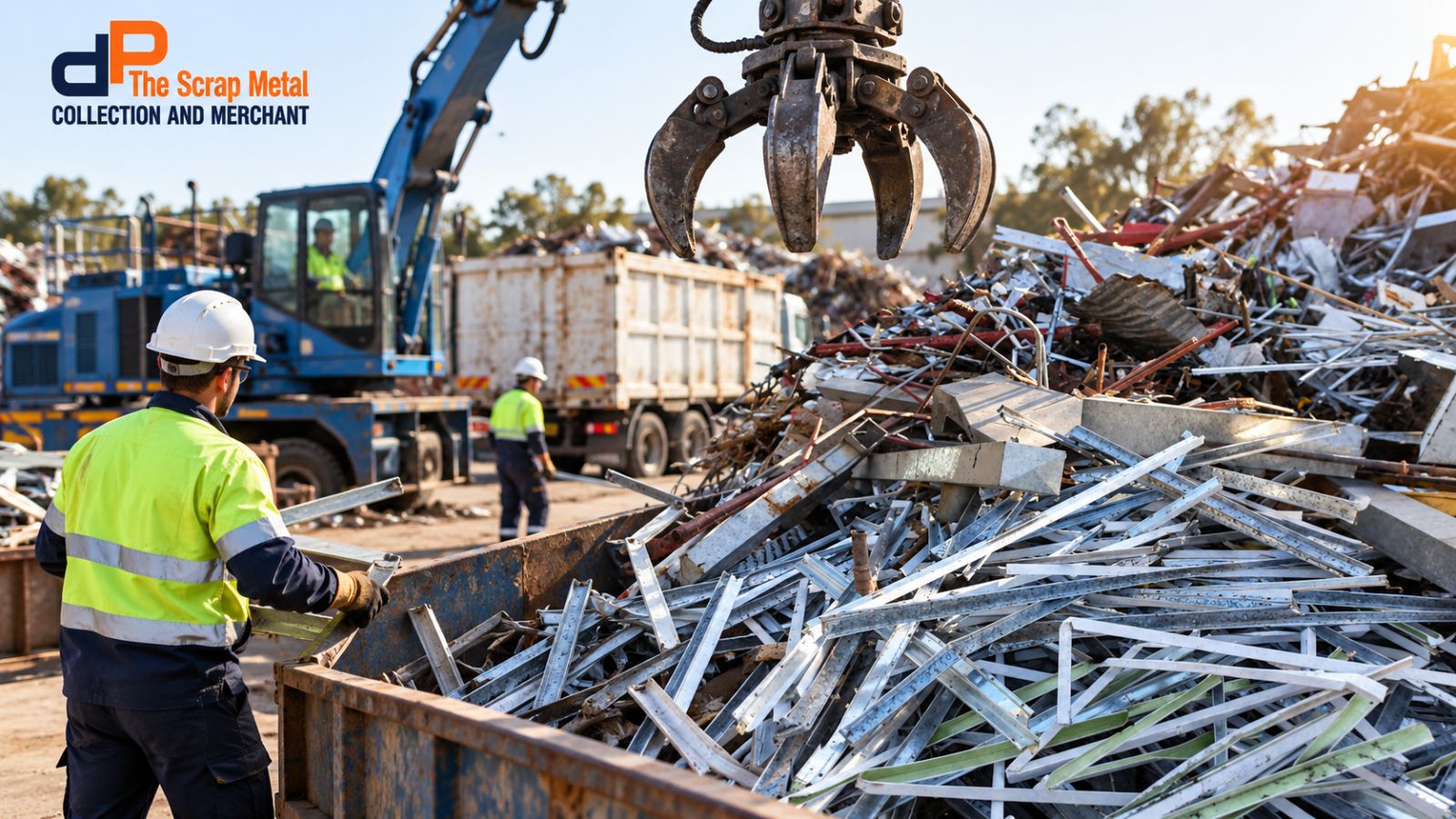
When you put old metal aside for recycling, you may wonder what happens next. Does it go straight to a recycling plant? Is every piece of metal recycled in the same way?
The scrap metal recycling process has several steps. Collection is only the beginning. After gathering, scrap metals are sorted, processed, and delivered to manufacturers for use in their new products.
This process recovers useful materials from trash items. The process may help reduce the amount of metal going to landfills and reduce the demand for some raw materials. The process varies depending on the metal, facilities, machinery, and location. However, most of the scrap metal collection generally follows the same procedure.
Scrap Metal Recycling is the process in which unused metals are collected and processed for reuse.
Some of the commonly recycled metals are:
Not every item follows the same process. A clean aluminium can may need different processing from a large steel beam or a copper cable. This is why proper sorting matters.
The process starts with Scrap Metal Collection. Scrap metal can come from many sources.
These include:
Good collection practices help keep different materials separate. For instance, a load of pure copper will be easier to recycle compared to a mixed load that has materials such as copper, iron, plastics, and wood. Clean materials make sorting and recycling easier.
Weighing is performed in many recycling centres. The weight offers valuable information on the quantity of material.
A load may weigh:
The actual weight depends on the material and the source. Staff may also inspect the load. They look for unwanted materials and items that require special handling. This stage helps the facility decide how the material should move through the recycling system.
Sorting is one of the most important parts of the scrap metal recycling process. Different metals have different properties and values.
A facility may separate materials into categories such as:
| Metal | Common Scrap Sources |
| Steel | Appliances, beams, machinery |
| Aluminium | Cans, frames, vehicle parts |
| Copper | Cables, pipes, electrical components |
| Brass | Fittings, valves, hardware |
| Stainless steel | Kitchen equipment, industrial items |
One basic distinction is between ferrous and non-ferrous metals. Ferrous metals contain iron.
Examples include:
Non-ferrous metals do not contain iron as their main component.
Examples include:
Magnets can help identify and separate many ferrous materials. This makes magnetic separation a useful part of many recycling systems.
Different metals require different processing methods.
Keeping them separated helps facilities produce cleaner material streams.
It also helps manufacturers receive material that better suits their production needs.
Scrap metal often contains other materials.
For example, an old appliance may contain:
These materials may need to be removed before further metal processing. The facility may use manual sorting, machinery, or a combination of methods. Removing unwanted materials improves the quality of the metal stream.
Large pieces of metal may need to be reduced in size. Facilities can use different equipment for this purpose.
Depending on the material, preparation may include:
For example, large steel sections may need cutting before further processing. Smaller pieces are often easier to sort and transport.
Some scrap goes through industrial shredders. The machines can break large metal items into smaller pieces. A shredded load can then move through additional separation equipment. The exact equipment varies between recycling facilities.
After shredding or size reduction, facilities may separate materials again. Different technologies can help identify and separate metals.
These may include:
Each system has a specific purpose. For example, magnetic equipment can remove many ferrous metals from a mixed material stream.
After sorting and preparing of the scrap, it will go for metal processing.
The objective of the process is to obtain useful recycled metal.
The process may include cleaning, sorting, cutting, or even preparation of the scrap metal.
Some facilities may involve melting of the metal.
It all depends on the type of metal.
Metals like aluminium, copper, and steel can be melted in an appropriate furnace.
This process involves heating the material up to its melting point.
Molten metal is moulded into the desired shape.
For example, it may become:
The final form depends on how manufacturers plan to use the material.
Recycling does not end after sorting.
Quality control remains important.
Facilities may check the processed material for:
Once processing is complete, recycled metal can enter another supply chain.
For example, recycled metal may become part of:
This is one of the main goals of metal recycling. The material gets another useful purpose instead of becoming waste.
There is no single time for every recycling load.
Processing time depends on:
Different metals follow slightly different paths.
Steel is commonly separated using magnetic equipment.
It may then be shredded, processed, and prepared for use in steel production.
Aluminium is separated from other materials and prepared for remelting.
Recycled aluminium can then become new aluminium products.
Copper often comes from cables, pipes, electrical equipment, and fittings.
It may require careful separation because clean copper has different characteristics from mixed or coated copper.
Brass can come from taps, fittings, valves, and other hardware. It needs to be separated from other metals before further processing.
Some scrap may contain substances that require special handling.
Examples can include:
These materials may require separate treatment.
Resource recovery involves recovering valuable resources from products that are normally considered to be waste products. Metal makes for a good resource to recover since most of the metals are reusable.
Rather than considering the metal as useless scrap, the recycling centres are able to reuse the metal in manufacturing. This establishes a link between the collection of waste and manufacturing processes.
Recycled metal can become an important input for manufacturing.
This creates a circular flow:
Collection → Sorting → Processing → Manufacturing → New Products
The process does not necessarily mean that an old product becomes the same product again. An old metal item can become part of a completely different product. For example, scrap from a construction project may eventually become material used in another manufactured product. DP The Scrap Metal Collection and Merchant is an expert in recycling scrap material.
Imagine a business removes 1,000 kg of old steel from a site.
The process may look like this:
This example shows why collection is only the first stage.
You could ease the process of recycling by sorting out your scrap.
Store copper, aluminium, steel, and other metals separately whenever you can.
Differentiate plastic, cardboard, wood, and other non-metal trash when possible.
There are products that require special recycling. Enquire with the recycling facility before shipping batteries, electronic appliances, tanks, or any other special product.
Dry metal makes for easy recycling.
The company will be able to guide you regarding the kind of scrap it accepts.
Before choosing a provider, ask:
These questions can help you understand the service.
The scrap metal journey does not stop after it is collected by a truck. The scrap metal recycling process involves collection, inspection, sorting, separation, preparation, processing, testing, and manufacturing. Various kinds of metals require various treatments. It will be easier to sort the metal if it is clean. Sorting and preparation may be required for contaminated materials.
After processing, the recycled metal may go back to manufacturing. Understanding the process will help prepare your scrap properly. When you use a responsible scrap metal collection service, you help keep useful metal in the recycling system and reduce unnecessary waste. DP The Scrap Metal Collection and Merchant offers sustainable manufacturing of recyclable materials.
Generally, inspection, sorting, separation, preparation, processing, and quality assessment take place after collection.
The common recyclable metals include steel, iron, aluminium, copper, brass, stainless steel, and zinc. The acceptance criteria may vary depending on facilities.
Metals possess different characteristics. Sorting allows achieving better separation and facilitates the processing process.
There are metals that should be processed using special methods. It is necessary to consult with the recycling provider before delivering metals with oil, batteries, chemicals, or other hazardous components.
It can be used in the manufacturing of building materials, vehicles, home appliances, machines, electronic devices, packaging materials, etc.