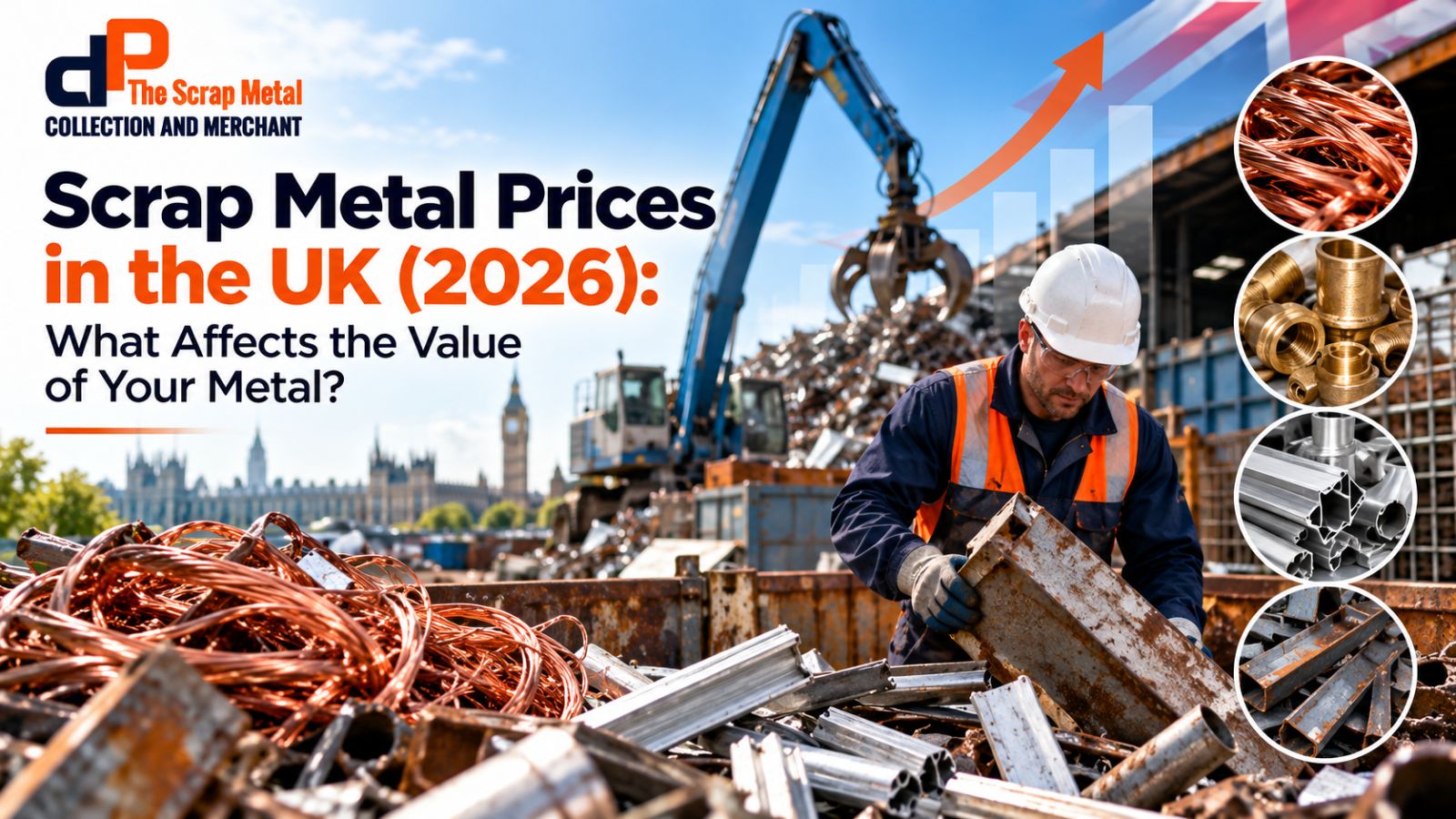
Understanding how scrap metal is valued can help households, tradespeople and businesses make better decisions when clearing unwanted materials. However, not all metal has the same value, and the amount a collector may offer depends on several factors beyond the type of material. Metal quality, condition, quantity, preparation and wider market demand can all influence the final assessment.
This Scrap Metal Price Guide explains the main factors that affect Scrap Metal Prices UK, how different metals are assessed and what you can do to prepare materials before arranging a collection. It also explains how responsible recycling helps recover useful resources while reducing unnecessary waste.
Understanding Scrap Metal Prices UK
Scrap metal is not valued simply because it is old, unwanted or no longer being used. Its value is largely connected to how easily it can be identified, processed and reused. Metals that can be recovered efficiently and have strong demand from manufacturers may attract greater interest than mixed, contaminated or difficult-to-process materials.
For example, a clean collection of copper pipe is easier to identify and sort than a container filled with mixed metal offcuts, plastic fittings and general rubbish. Even if both collections contain useful material, their handling and processing requirements are different.
The value of scrap can also change as industrial demand, manufacturing activity, energy costs and the availability of recycled materials shift. This means that an assessment should consider the actual material being collected rather than relying on an old estimate or a general assumption about what a particular metal is worth.
Why Metal Prices Are Not the Same for Every Material
Different metals have different properties and uses. Copper is widely used in electrical systems and plumbing, aluminium is common in transport and construction, and steel is used in buildings, machinery and everyday products. Their recycling processes, supply levels and market demand are not identical.
Even within one metal category, condition matters. Clean, identifiable material may be easier to process than items containing coatings, attachments or other substances. A reliable assessment therefore looks at the material itself, its condition and the work needed to recover it.
The Main Factors That Affect Scrap Metal Value
Several considerations influence the amount a scrap dealer may offer for collected material. Understanding them helps explain why two apparently similar loads can receive different assessments.
1. Metal Type and Material Composition
The first consideration is the type of metal. Copper, brass, aluminium, stainless steel, lead and different grades of steel are not interchangeable. Each has its own physical properties, recycling requirements and uses in manufacturing.
Material identification is particularly important when an item contains more than one metal. A household appliance, for instance, may include a steel casing, copper wiring, aluminium components, plastic parts and electronic fittings. The entire appliance should not automatically be treated as one valuable metal category.
When preparing a collection, keep clearly identifiable materials separate where practical. This makes it easier to assess what is present and reduces the chance of useful materials being mixed with general waste.
2. Metal Quality, Cleanliness and Condition
The condition of scrap can affect how easily it can be sorted and processed. Clean metal without unnecessary attachments is generally simpler to assess than material covered in dirt, insulation, paint, rubber or other substances.
Consider two batches of aluminium. One contains clean, separated aluminium pieces, while the other includes mixed components with plastic, screws and other materials attached. Both may contain recoverable aluminium, but the second batch requires more sorting and preparation.
This does not mean every item needs to be stripped or dismantled before collection. Some materials should only be handled by people with the appropriate knowledge and equipment. The sensible approach is to remove loose, easily separated non-metal waste where safe and leave complex dismantling to suitable professionals.
3. Quantity and Collection Requirements
The amount of material available can influence how a collection is arranged and assessed. A small quantity of metal from a household clear-out may involve different handling requirements from a large quantity generated by a workshop or construction project.
The type of collection also matters. Heavy machinery parts, awkward metal frames and bulky equipment may require additional handling compared with neatly stored metal offcuts. Access to the collection area, loading conditions and the need to separate different materials can all affect the work involved.
If you have a substantial amount of scrap, provide a clear description of the materials and approximate quantity when making an enquiry. Photographs can also help communicate the type and condition of the items, although a final assessment may still depend on inspection.
4. Metal Market Trends and Industrial Demand
Scrap metal is part of a wider supply chain. Recovered materials can be processed and used as raw materials in manufacturing, construction, engineering and other industries. As a result, demand from these sectors can influence the interest in different types of scrap.
Metal Market Trends may be affected by several factors, including:
- Manufacturing activity and demand for raw materials.
- Construction and infrastructure projects.
- Availability of newly mined and recycled metals.
- Energy and processing costs.
- International supply and demand.
- Changes in industrial production and material requirements.
These factors help explain why the value of a particular metal can change. A material that is in strong demand may attract more interest, while reduced industrial activity or an increase in available supply may affect its market position.
For anyone selling scrap, the important point is that market conditions are not fixed. A previous assessment should not be treated as a permanent indication of what the same material will be worth later.
5. Sorting, Contamination and Processing
Mixed materials can be more difficult to assess because the actual metal content may not be immediately clear. A pile of old fittings, electrical components and broken equipment may contain several metal types alongside plastic, insulation and other waste.
Sorting helps identify the recoverable materials and makes recycling more efficient. However, it should be done carefully. Electrical equipment, sealed containers, chemical residues and unfamiliar components may present safety risks.
Do not burn insulation from cables, use chemicals to remove coatings or dismantle potentially hazardous equipment without appropriate training and equipment. These methods can expose people to harmful substances and create environmental risks.
Different Metals and What Influences Their Scrap Value
Understanding individual metal categories can help you prepare a collection more effectively. The following sections explain common materials and the factors that may influence their assessment.
Copper Prices and Copper Scrap
Copper is widely used in electrical wiring, plumbing systems, heating equipment and industrial machinery. Its usefulness and ability to be recycled make it an important material within the scrap industry.
Copper Prices can be influenced by industrial demand, global supply, manufacturing activity and the wider market for copper. However, the condition and form of the material also matter when it is assessed.
Common examples include:
- Copper pipes from plumbing projects.
- Copper wiring and cable.
- Copper fittings and connectors.
- Copper components recovered from suitable equipment.
Different copper items may require different handling and sorting. Cable containing insulation, for example, is not the same as clean copper material. Avoid burning or using unsafe methods to remove insulation. Proper identification and responsible processing are safer ways to recover the metal.
Brass Scrap
Brass is an alloy made primarily from copper and zinc. It is commonly found in plumbing fittings, valves, taps, decorative hardware and certain engineering components.
The composition and condition of Brass Scrap can affect how it is assessed. Brass items may also contain steel screws, rubber seals, plastic handles or other attachments. Where these can be separated safely, doing so may make the material easier to identify.
Do not assume that every yellow-coloured metal item is brass. Some products use coatings or other alloys that look similar. If you are unsure, keep the material separate and allow it to be identified during assessment.
Aluminium Scrap
Aluminium is used in window frames, doors, vehicle components, household products, machinery and packaging. It is relatively lightweight and can be recycled for use in a range of manufacturing applications.
The category and condition of Aluminium Scrap can influence its assessment. Clean aluminium sections may be easier to sort than mixed items containing glass, rubber, steel or plastic. Aluminium products can also include different alloys, so appearance alone is not always enough to determine the exact material.
Before arranging collection, separate obvious non-metal attachments where this can be done safely. Large frames, vehicle parts and complex components may be better left intact for professional handling.
Steel and Stainless Steel
Steel is commonly found in household appliances, shelving, machinery, tools, construction materials and vehicle components. Stainless steel is a separate category with different properties and alloy composition.
Although both contain iron, they should not automatically be grouped together. Stainless steel may contain chromium and other elements that influence its corrosion resistance and recycling characteristics.
If you have a mixed collection, keep identifiable stainless steel items separate from ordinary steel where practical. This helps avoid confusion during sorting and assessment.
How to Prepare for a Scrap Metal Collection
Good preparation can make the collection process more straightforward. It also helps ensure that useful materials are not unnecessarily mixed with general rubbish.
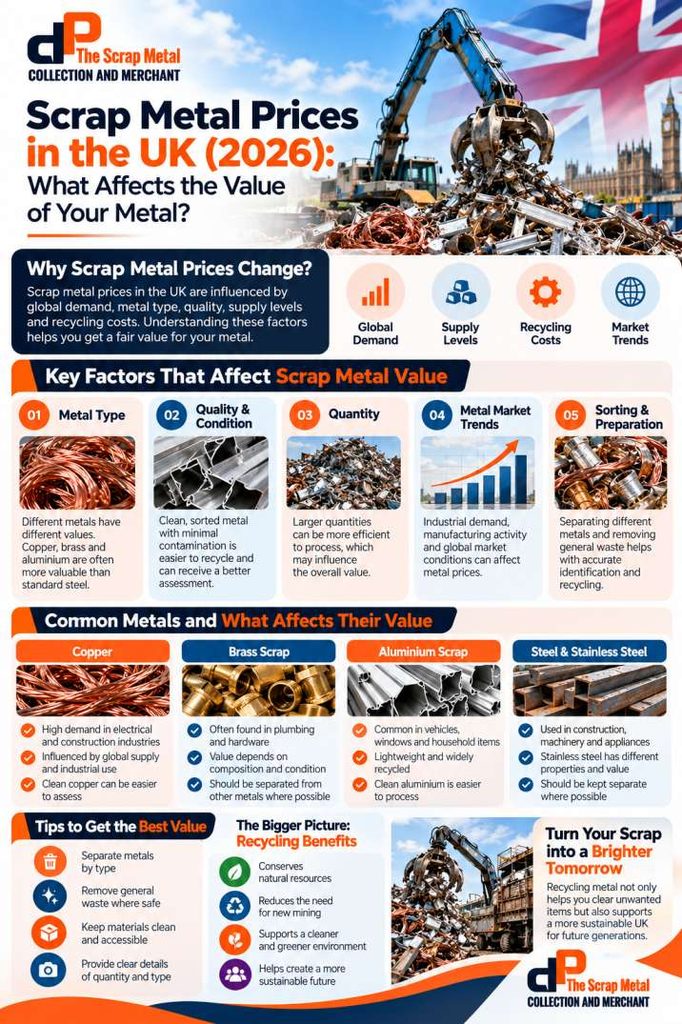
Separate Metals by Type
Start by grouping materials that you can confidently identify. Keep copper, brass, aluminium and steel in separate areas or containers where possible. If you cannot identify an item, do not guess. Set it aside for assessment.
This simple step can make a mixed collection easier to understand. It is particularly useful for garages, workshops, renovation sites and commercial premises where different materials may accumulate over time.
Remove General Waste Where Safe
Packaging, loose plastic, cardboard and unrelated household rubbish should not be mixed unnecessarily with scrap metal. Removing loose waste can make the metal easier to inspect and handle.
However, do not attempt to remove components that are fixed, hazardous or difficult to access. Items containing electrical parts, pressurised systems, chemicals or unknown substances may require specialist handling.
Keep Materials Accessible
Arrange materials in a location where they can be inspected and collected safely. Avoid blocking entrances, walkways, fire exits or access to essential equipment. Heavy objects should not be stacked in unstable piles, and sharp edges should be kept away from areas where people walk.
If the collection includes bulky machinery or large metal frames, explain the access conditions before the collection is arranged. This helps establish whether suitable handling arrangements are required.
The Role of Scrap Metal Collection in Responsible Recycling
A well-managed Scrap Metal Collection process does more than remove unwanted items. It helps recover materials that can be processed and returned to manufacturing supply chains.
Metals such as copper, aluminium and steel can often be recycled rather than sent directly to general waste disposal. Recovering these resources can reduce the need for newly extracted raw materials and support more efficient use of existing resources.
For households, this may involve old metal furniture, broken appliances or unused tools. Tradespeople may have offcuts, pipes, fittings and wiring left after installation work. Businesses can generate larger quantities through maintenance, equipment replacement and production activities.
The correct route depends on the material. Not every item containing metal is suitable for ordinary scrap collection. Electrical equipment, batteries, gas cylinders, chemical containers and other potentially hazardous items may need separate handling through appropriate waste channels.
A responsible collection process should therefore consider both material recovery and safe disposal. The aim is not simply to remove everything from a property, but to ensure that materials are handled appropriately.
Common Mistakes That Can Affect Scrap Value
Even when people have useful metal to recycle, a few avoidable mistakes can make the process more difficult.
Mixing Different Metals Together
Combining copper, brass, aluminium and steel in one container can make identification and sorting more complicated. Keep clearly identifiable categories separate whenever possible, especially when preparing a larger collection.
Assuming All Metal Items Have the Same Value
Two objects that look similar may contain different materials or alloys. Coatings, attachments and internal components can also affect how an item is classified. Avoid relying only on colour, weight or appearance when identifying metal.
Using Unsafe Methods to Prepare Materials
Burning cables, cutting sealed containers or dismantling electrical equipment without proper knowledge can create serious hazards. Preparation should never put personal safety or the environment at risk. Leave complex or potentially dangerous items to appropriately equipped professionals.
Relying on Old Scrap Assessments
Market conditions can change, and an earlier assessment may not reflect the current value of a material. If you are planning a collection, request an up-to-date assessment based on the actual metal type, quantity and condition.
Practical Tips for Getting a Clear Scrap Assessment
A little preparation can help you explain your collection accurately and understand how the material is being assessed. Consider the following steps before arranging a collection:
- Identify the main metal types: Separate materials you can confidently recognise, such as copper, brass, aluminium and steel.
- Estimate the quantity: Provide a reasonable description of the amount or number of items rather than guessing an exact weight.
- Describe the condition: Mention whether the metal is clean, mixed, coated or attached to other materials.
- Explain access requirements: Identify bulky items, narrow entrances, stairs or other obstacles that may affect collection.
- Ask how the material is assessed: Clarify whether the assessment is based on metal type, grade, weight, condition and any additional handling requirements.
These details help establish realistic expectations. They also make it easier to understand why different materials within the same collection may be treated separately.
Why Choose a Responsible Scrap Dealer?
Choosing a suitable scrap dealer is important because metal collection involves more than loading unwanted items onto a vehicle. Materials need to be identified, handled, transported and directed towards appropriate recycling or disposal routes.
Look for clear communication about accepted materials, collection arrangements and the assessment process. A responsible operator should be able to explain how different metals are classified and identify items that may require separate handling.
It is also important to understand the relevant legal requirements. Scrap metal activities in the UK are subject to regulatory controls, and legitimate operators must follow applicable requirements for their business activities, record-keeping and transactions. Customers should provide accurate information about the materials and their ownership rather than attempting to dispose of items whose origin is unclear.
A professional approach supports trust, responsible recycling and a smoother experience for both the customer and the collection business.
Conclusion: Make Better Decisions with This Scrap Metal Price Guide
Understanding metal type, condition, quantity and market demand makes it easier to see why scrap assessments can vary. Copper, brass, aluminium, steel and stainless steel each have different characteristics, and mixed or contaminated materials may require additional sorting. By separating identifiable metals, avoiding unsafe preparation methods and asking clear questions, you can make the collection process more straightforward and support responsible recycling.
This Scrap Metal Price Guide is intended to help households, tradespeople and businesses make informed decisions before arranging a collection. For support with unwanted recyclable metal, DP The Scrap Metal Collection and Merchant provides a point of contact for discussing collection requirements and the materials you need to clear. A clear description of your scrap can help establish the most suitable next step.
Frequently Asked Questions
1. What determines Scrap Metal Prices UK?
Scrap Metal Prices UK are influenced by the type of metal, its grade, condition, cleanliness, quantity and current market demand. Processing requirements and the amount of sorting needed can also affect an assessment. For example, clean copper material may be easier to classify than mixed components containing insulation, plastic and other metals. The most reliable assessment is based on the actual materials being collected rather than a general estimate.
2. Why can two collections of the same metal receive different assessments?
Two collections may contain the same broad metal category but differ in quality, composition and condition. One batch may be clean and separated, while another contains coatings, attachments or mixed materials. Quantity and collection requirements can also differ. These details affect how easily the material can be identified and processed, which is why the category alone does not determine its final assessment.
3. Which common household items contain recyclable scrap metal?
Many household items contain recoverable metals, including old radiators, metal shelving, copper pipes, brass taps, aluminium frames, steel tools and certain appliance components. However, some products combine metal with electrical parts, batteries, plastics or potentially hazardous materials. These items may require separate handling. Check what a collector accepts before including appliances or unfamiliar equipment in an ordinary metal collection.
4. Should I clean or dismantle scrap metal before collection?
You can separate loose general waste and group clearly identifiable metals where it is safe to do so. However, extensive cleaning or dismantling is not always necessary and may create avoidable risks. Do not burn cables, cut sealed containers or dismantle electrical equipment without appropriate knowledge and equipment. If an item contains hazardous components or you are unsure how it should be handled, explain this before arranging collection.
5. How can I get a more accurate scrap metal assessment?
Provide a clear description of the materials, their approximate quantity and their condition. Keep different metal types separate where practical and mention any contamination, coatings or bulky items. Photographs may help explain what is included, but they may not replace an inspection. Ask how the material will be classified and whether the assessment considers grade, weight, condition and collection requirements.


