
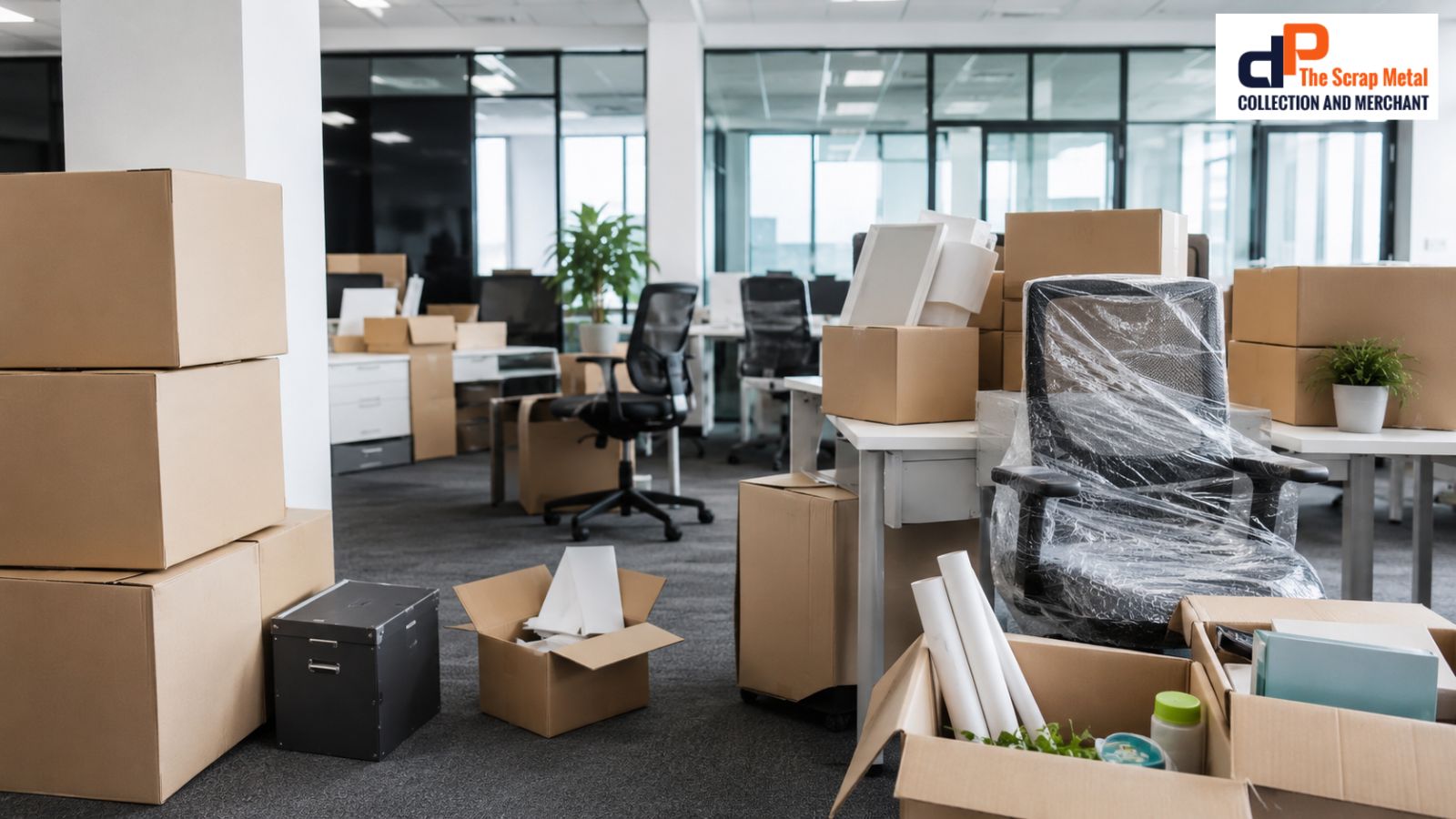
A cluttered workplace does more than make an office look untidy. Old desks stacked in corridors, unused filing cabinets occupying valuable floor space, broken chairs stored in meeting rooms, and discarded equipment left in corners can gradually create genuine operational and safety problems.
For businesses planning a relocation, refurbishment, downsizing, renovation, or simply a workplace clean-up, Office Furniture Removal can be an important part of creating a safer and more productive environment.
Professional clearance is not simply about getting unwanted items out of a building. A well-planned clearance process considers what can be reused, what should be recycled, what requires appropriate waste handling, and how bulky items can be removed without creating additional risks for employees or the property.
This is particularly important in busy commercial environments. Employees need clear walkways, accessible emergency routes, organised work areas, and enough space to perform their duties comfortably.
The Office Clearance Benefits therefore extend beyond appearance. A properly cleared workplace can support better organisation, reduce avoidable hazards, improve the use of available space, and contribute to more responsible business waste management.
For businesses working with DP The Scrap Metal, understanding the practical side of office clearance can help make the process more efficient while reducing unnecessary waste.
Why Office Clearance Matters in a Modern Workplace
Offices accumulate belongings surprisingly quickly.
A business may replace desks but retain the old furniture “just in case.” A company might upgrade computers while keeping obsolete equipment in storage. During an office move, boxes, chairs, cabinets, shelving, and miscellaneous items can end up temporarily occupying spaces that were never designed for storage.
Over time, temporary storage can become permanent clutter.
This can affect how employees move around the workplace and how effectively the available floor area is being used.
Professional clearance helps businesses take a structured approach to unwanted items instead of simply moving them from one room to another.
A proper assessment can identify:
- Furniture that is no longer required
- Damaged or unusable office furniture
- Metal cabinets and shelving
- Desks and workstations
- Office chairs
- Storage equipment
- Unwanted fixtures and fittings
- Scrap metal
- General commercial waste
- Items suitable for reuse or recycling
The objective should not always be to dispose of everything. Where practical, usable items may have a second life, while recyclable materials can be separated from general waste.
That distinction is an important part of responsible Business Waste Management.
Office Clearance and Workplace Safety
Workplace safety is one of the most practical reasons to keep an office properly organised.
A chair sitting in a corridor might seem harmless. A dismantled desk leaning against a wall may appear temporary. Several filing cabinets stacked in a storage room may not seem particularly concerning.
But individual issues can become more significant when combined.
Removing Trip and Obstruction Hazards
Cluttered walkways increase the possibility of trips, collisions, and restricted movement.
Common examples include:
- Boxes stored beside walkways
- Disassembled furniture blocking access routes
- Loose cables and components
- Chairs stacked in unsuitable locations
- Cabinets positioned near doors
- Packaging materials left after furniture deliveries
Removing unnecessary items helps maintain clearer circulation routes.
This is especially important around entrances, stairways, exits, fire safety equipment, electrical access points, and other areas where obstruction could cause problems.
Improving Access to Emergency Routes
Emergency routes should never become informal storage areas.
During a clearance project, it is worth checking whether unwanted furniture or accumulated materials are affecting access to doors, corridors, staircases, or designated emergency equipment.
Professional removal can help restore usable space without requiring employees to navigate around bulky objects.
Reducing Manual Handling Risks
Large office furniture can be surprisingly difficult to move.
A metal filing cabinet, heavy desk, storage unit, or workstation may require awkward lifting and carrying. Attempting to move such items without suitable equipment or sufficient people can increase the risk of strains, crush injuries, or property damage.
A planned removal process can assess the item before moving it.
Where necessary, furniture may be dismantled into manageable sections before being transported through doors, lifts, staircases, or narrow corridors.
That is generally safer than attempting to force a large item through a restricted space.
Office Furniture Removal During a Business Move
Office relocations are one of the most obvious situations where furniture removal becomes necessary.
When a company moves premises, there is often a temptation to take everything with it.
That can be expensive and inefficient.
Old furniture may not fit the new layout. Storage requirements may have changed. Some equipment may be damaged or obsolete. The new workplace may already have furniture installed.
Carrying unnecessary items from one building to another simply transfers the problem.
Plan Clearance Before Moving Day
One of the most effective approaches is to separate clearance from the actual relocation.
Instead of having employees decide what to throw away while movers are loading the office, businesses can conduct an inventory beforehand.
Divide items into categories such as:
- Keep – required at the new workplace.
- Reuse – suitable for another department, employee, or organisation.
- Recycle – materials that can potentially be recovered.
- Dispose – items that are no longer usable and require appropriate waste handling.
This makes moving day considerably more organised.
It can also reduce the amount of transport space required because only necessary items are moved.
Office Clearance Can Improve Productivity
Productivity is often discussed in terms of software, technology, workflows, and employee performance.
The physical workplace also matters.
Employees working in an overcrowded environment may spend unnecessary time looking for equipment, navigating around stored items, or dealing with disorganised work areas.
A clearer office can make everyday activities more straightforward.
Better Use of Floor Space
Unused furniture takes up valuable floor area.
For example, a business may have a meeting room containing several old desks that are no longer used. Removing them could create space for collaborative seating, storage, equipment, or another practical purpose.
Similarly, an unused row of filing cabinets could be removed to create additional working space.
The benefit is not simply aesthetic. Businesses pay for their premises, so using that space effectively makes operational sense.
Less Visual Distraction
A workspace filled with obsolete furniture, boxes, and discarded equipment can create a sense of unfinished work.
Clearing unnecessary items can make the workplace feel more organised and easier to maintain.
Employees can focus on their actual tasks rather than working around stored materials.
Easier Cleaning and Maintenance
Cleaning teams can work more effectively when floors and accessible surfaces are not obstructed by unwanted furniture.
Maintenance workers also need reasonable access to walls, floors, electrical infrastructure, air-conditioning equipment, and other building systems.
Removing redundant items can therefore make routine maintenance easier.
Office Furniture: What Should Be Removed?
Not every old piece of furniture automatically needs to go.
The most useful question is whether the item still has a practical role in the business.
Consider removing furniture that is:
- Broken beyond economical repair
- Unsafe or unstable
- No longer required
- Incompatible with the current office layout
- Taking up valuable storage space
- Damaged by water or other environmental conditions
- Surplus after a refurbishment
- Too costly or impractical to relocate
Metal furniture deserves particular attention because items such as filing cabinets, shelving, desks, frames, and other fixtures may contain recoverable metal.
Separating recyclable materials from general Waste can help businesses make better use of available resources.
Recycling and Sustainable Disposal
Modern office clearance should consider what happens to unwanted materials after they leave the workplace.
Simply loading everything into a vehicle and treating it as mixed waste is not always the most responsible approach.
A better process begins with sorting.
Office Recycling
Depending on the condition and composition of the items, materials may include:
- Steel
- Aluminium
- Other metals
- Wood
- Plastics
- Cardboard
- Glass
- Electrical components
- Mixed materials
Metal is particularly valuable because many metals can be recovered and processed for future use.
For a business clearing a large quantity of metal office furniture, separating those materials can significantly reduce the amount of material requiring general disposal.
Sustainable Disposal Is About More Than Recycling
Sustainable Disposal means considering the full lifecycle of unwanted items.
A sensible hierarchy is often:
Reuse → Recover/Recycling → Appropriate Disposal
If a usable desk can be reused, throwing it away may be unnecessary.
If a damaged metal cabinet cannot reasonably be reused but contains recyclable material, recovery may be preferable to sending it to general waste.
The exact handling method depends on the material, condition, and applicable waste requirements.
Businesses should also ensure that any specialist or regulated waste is handled through appropriate channels rather than treating every item as ordinary commercial waste.
Business Clearance After an Office Refurbishment
Office refurbishments often generate more waste than businesses initially expect.
Removing partitions, old workstations, cabinets, shelving, furniture, fixtures, and miscellaneous materials can quickly create a substantial clearance requirement.
The biggest mistake is leaving clearance until the end.
Coordinate Clearance With the Refurbishment
Clearance should be incorporated into the refurbishment schedule.
For example:
Phase 1: Identify items being replaced.
Phase 2: Sort reusable, recyclable, and disposable materials.
Phase 3: Remove redundant furniture before contractors need unrestricted access.
Phase 4: Complete refurbishment work.
Phase 5: Remove remaining project waste and prepare the workplace for occupation.
This approach avoids having contractors work around piles of old furniture.
It also reduces the chance that recyclable materials become mixed with general construction waste.
Office Waste Clearance Without Disrupting Employees
Office clearance can become disruptive when it is poorly planned.
Employees may need to work while furniture is being removed, particularly in larger businesses that cannot close completely.
A practical clearance plan should consider:
- Working hours
- Employee movement
- Lift access
- Loading areas
- Parking restrictions
- Building management requirements
- Noise
- Furniture dismantling
- Temporary storage
- Security procedures
For busy offices, removal may be scheduled outside peak working hours where practical.
The goal is to complete the clearance efficiently while keeping normal business operations moving.
Common Office Clearance Mistakes
Moving Everything Without Sorting
Transporting unwanted furniture to another building does not solve the problem.
Sort items before they are moved.
Treating All Materials as General Waste
Some materials may have recycling or recovery value.
Separating metal, cardboard, and other recyclable materials can support better waste management.
Allowing Employees to Move Heavy Furniture
Employees should not automatically be expected to handle large or awkward items.
Furniture removal requires consideration of weight, access, lifting technique, and equipment.
Ignoring Building Access
A large desk might fit through the office door but fail to fit through the lift or building entrance.
Assess the removal route before starting.
Leaving Clearance Until the Last Minute
Last-minute removal can interfere with moving schedules, contractors, cleaning teams, and staff.
Planning ahead generally produces a smoother result.
Expert Tips for a Safer Office Clearance
From a practical perspective, several simple measures can make a significant difference.
Create an Item Inventory
Before anything is removed, walk through the office and list what needs to go.
Photographs can also be useful for documenting larger furniture and identifying items that need dismantling.
Separate Materials Early
Don’t wait until everything reaches the loading area.
Where practical, identify metal, recyclable materials, reusable furniture, and general waste during the initial sorting process.
Measure Large Furniture
Check the dimensions of bulky desks, cabinets, and shelving units before planning their removal.
This can prevent surprises when navigating lifts, corridors, and doorways.
Protect Building Surfaces
Heavy furniture can damage flooring, walls, doors, and corners during removal.
Use suitable handling methods and protection where necessary.
Keep Staff Away From Active Removal Areas
If large items are being dismantled or transported, create a clear working area.
Employees should not have to walk through an active removal route.
Confirm Where Materials Are Going
A responsible clearance process should have a clear destination for different material types.
Knowing what happens after collection is an important part of trustworthy Business Waste Management.
How Professional Clearance Supports Workplace Safety and Efficiency
When handled correctly, office clearance can create several interconnected benefits.
Removing redundant furniture creates space.
More space improves movement.
Better movement can reduce obstructions.
Fewer obstructions can contribute to a safer working environment.
A more organised workplace can also make cleaning, maintenance, storage, and everyday tasks easier.
This is why the Office Clearance Benefits go well beyond simply having a cleaner-looking office.
The real value comes from making the workplace more functional.
When Should a Business Consider Office Clearance?
Businesses do not need to wait until they relocate to consider clearance.
Useful opportunities include:
- Before an office move
- After downsizing
- During refurbishment
- Following a furniture upgrade
- When storage areas become overcrowded
- When obsolete furniture accumulates
- After a business closure
- When leased premises need to be returned
- When workplace layouts change
- During a broader commercial clean-up
A periodic review can also prevent unnecessary accumulation.
Instead of allowing unwanted items to remain in storage for years, businesses can establish a process for reviewing unused furniture and materials.
Conclusion
A well-managed office clearance is not simply a cleaning exercise. It is an opportunity to improve how a workplace operates.
Removing obsolete Office Furniture, clearing unnecessary materials, recovering recyclable resources, and creating better use of available space can contribute to a safer and more efficient working environment.
The strongest results come from planning the process rather than treating clearance as an afterthought. Inventory the items, assess access routes, separate recyclable materials, consider employee safety, and establish appropriate destinations for different types of waste.
For businesses dealing with Office Furniture Removal, these practical steps can make the entire process more efficient while supporting responsible Commercial Waste management.
Ultimately, the Office Clearance Benefits are most valuable when they extend beyond appearance: a clearer workplace can support safer movement, better organisation, easier maintenance, more efficient use of space, and a more considered approach to recycling and waste.
DP The Scrap Metal can be part of that process by helping businesses deal with unwanted metal items and clearance requirements in a practical, responsible manner. The right approach is not about removing everything as quickly as possible—it is about removing what is no longer needed while giving suitable materials the best possible route for reuse, recovery, recycling, or appropriate disposal.
Frequently Asked Questions
1. What is included in Office Furniture Removal?
Office Furniture Removal can include the collection and removal of unwanted desks, chairs, cabinets, shelving, workstations, metal furniture, and other bulky workplace items.
The exact scope depends on the clearance project. Businesses should identify what needs to be removed before collection so that access, dismantling, labour, and transport requirements can be considered.
For large or heavy items, the removal route should also be assessed beforehand.
2. How does office clearance improve workplace safety?
Removing unnecessary furniture and accumulated materials can help keep walkways, work areas, doors, and access routes clear.
It can also reduce the need for employees to navigate around bulky objects or attempt to move heavy furniture themselves.
However, clearance should complement—not replace—the employer’s broader workplace safety responsibilities and risk-management procedures.
3. What happens to old metal office furniture?
Old metal furniture may contain materials that can be recovered for recycling, depending on its composition and condition.
Items such as steel filing cabinets, metal shelving, desks, frames, and similar products can potentially enter a metal recycling stream rather than being treated entirely as general waste.
Sorting materials before removal can make recovery more practical.
4. Is Office Waste Clearance suitable during an office relocation?
Yes. In fact, relocation is one of the most useful times to conduct clearance.
Businesses can decide what actually needs to move before paying to transport unwanted furniture and materials to the new premises.
Ideally, clearance should be planned before moving day so removal teams and movers are not competing for the same space and access routes.
5. How can businesses make office clearance more sustainable?
Start by sorting unwanted items into reusable, recyclable, and disposal categories.
Look for opportunities to reuse suitable furniture and recover recyclable materials such as metal. Avoid mixing recyclable materials with general waste unnecessarily.
Businesses should also use appropriate waste channels for materials that require specialist handling.
A thoughtful approach to Office Recycling and Sustainable Disposal can reduce unnecessary waste while making the clearance process more organised.


