
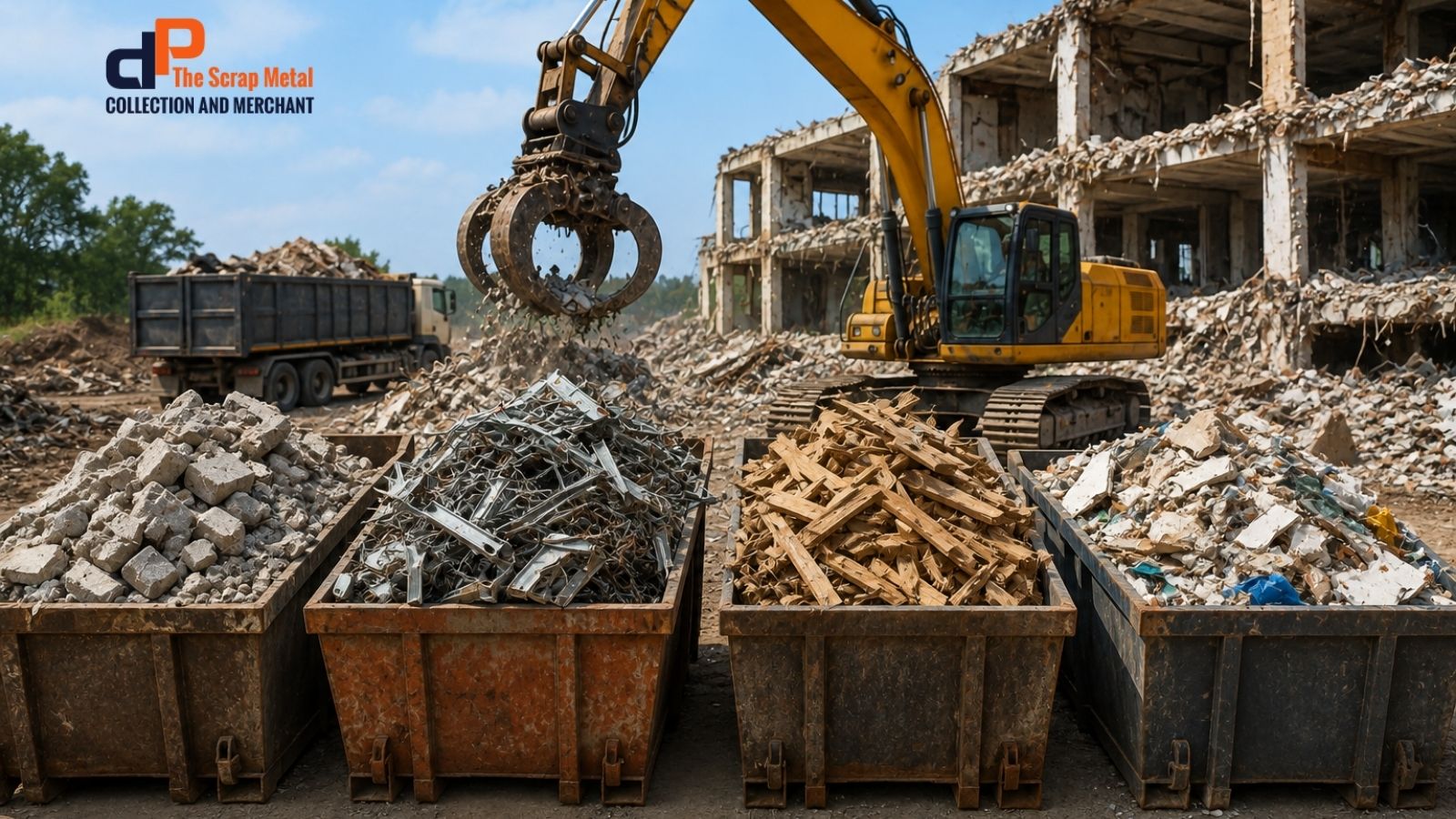
Demolition of an existing building produces a large quantity of debris, including metal, wood, glass, and other types of materials. The misconception is that these materials are sent straight to the landfill. There are other things you can do with them.
A professional demolition clearance service provider will be able to separate valuable materials from waste. Concrete, bricks, metals, timber, and some plastic materials may become something else. This will result in less waste being sent to the landfill. We recommend that you think about waste recovery before the demolition process begins.
In the past, it was a common practice to load the mixed materials into big skips and then send them all to the landfill. Modern construction site clearance takes a different approach. The companies separate the materials where possible and send them to suitable recycling or recovery facilities.
Environmental rules also made waste management more important. Contractors need to understand what materials are present, how they can handle those, and where they can legally be taken. The difference between older and modern approaches can be seen below.
Traditional vs. Modern Clearance
| Feature | Traditional Clearance | Modern Clearance |
| Main focus | Fast dumping | Material recovery |
| Primary destination | Local landfills | Recycling plants |
| Sorting process | Mixed waste | On-site segregation |
| Environmental impact | Higher waste impact | Lower waste impact |
| Salvage value | Often wasted | Recovered for reuse |
| Material handling | Limited separation | Planned separation |
| Waste planning | Often done late | Planned before demolition |
With good planning, one can be able to salvage much of the non-hazardous demolition debris. The amount that one salvages will depend on various factors such as
- the nature of the building
- type of materials,
- contamination of materials
- facilities available in the locality
This is why the undertaking of a waste audit is important at the beginning of the demolition project. It helps to identify what will be able to be reused, recycled, disposed of, or even sold. Demolition waste recycling is now of utmost importance.
Recyclable Key Materials from Construction Waste
Most buildings have recyclable materials. Nonetheless, not all these materials will have a similar recycling process. Sorting is important. Construction site clearance depends on the following points.
1. Concrete, Bricks, and Masonry
Concrete and bricks are normally some of the most bulky materials after demolition. They are crushable. They can form recycled aggregate. Recycled aggregate can be used in constructing driveways, paths, roads, and even construction works.
2. Scrap Metals
Steel, iron, copper, and aluminium are valuable recyclable materials. These materials are separable from other construction waste.
Metal recovery also helps reduce the need for new raw materials. Once collected, metals can be sent to specialist recycling facilities. They can then be processed into materials for new products.
3. Timber and Wood Products
Timber is reusable when it is clean and in good condition. Old beams, floorboards, doors, and other wooden features may be suitable for salvage.
Damaged timber can sometimes turn into wood chips or other products. However, painted, treated, or contaminated wood may require different handling.
Before removing timber, the demolition team should check its condition and whether it contains coatings or treatments that affect disposal.
4. Plastics, Glass, and Fixtures
Buildings can contain plastic pipes, window frames, glass, doors, sinks, lighting fixtures, and other fittings.
Some materials are recyclable. Others are reusable without being processed. For example, an undamaged door or light fixture may be more useful as a salvaged product than as recycling material. This is why careful removal can be better than simply breaking everything apart.
How the Site Demolition Clearance Process Works
Good demolition clearance service starts before the first wall comes down. A professional team should understand the site, identify materials, and plan how construction waste will be handled.
The typical process looks like this:
The Clearance Workflow
| Step | What Happens |
| Step 1: Pre-demolition audit | Identify hazards, recyclable materials, and metal salvage goods |
| Step 2: Strip-out phase | Remove doors, glass, wiring, fixtures, and other fittings |
| Step 3: Structural teardown | Separate concrete, brick, timber, and steel where possible |
| Step 4: On-site sorting | Place different materials into designated areas or containers |
| Step 5: Licensed transport | Move materials to approved concrete recycling, recovery, or disposal facilities |
The strip-out stage is especially useful. Removing fixtures before structural demolition can prevent them from being broken or contaminated.
Hazardous materials also need special attention. Materials such as asbestos should not be treated as normal building waste. They require appropriate identification, handling, transport, and sustainable disposal procedures.
Common Mistakes to Avoid in Building Waste Management
Mistake #1: Mixing Hazardous Materials With General Waste
Mixing hazardous materials with clean recyclable waste can contaminate the entire load. This may prevent the material from being recycled.
Better approach: Identify potential hazardous materials before demolition and arrange the correct handling process.
Mistake #2: Hiring an Unlicensed Waste Hauler
Using an unsuitable waste carrier can create legal and environmental problems. It can also make it difficult to prove where waste was taken.
Better approach: Check the carrier’s credentials and ask how you can transport the waste.
Mistake #3: Skipping On-Site Sorting
Putting every material into one container makes concrete recycling harder. It can also increase the amount of waste that requires disposal.
Better approach: Create separate areas for materials such as metal, timber, concrete, and general waste.
Expert Tips for a Cleaner Site
Pro Tip #1: Start With a Soft Strip-Out
Remove doors, wiring, plumbing, fixtures, and other fittings before heavy demolition begins. This can make valuable items easier to recover.
Pro Tip #2: Plan Recycling Before Demolition
Do not wait until the site is full of waste. Decide where different materials will go before work begins.
Pro Tip #3: Keep Materials Separate
Separate materials as they are removed. Clean loads are generally easier to recycle than mixed loads.
Pro Tip #4: Keep Waste Records
Keep records of waste movements and disposal activities. This provides a useful project trail and helps demonstrate responsible waste management.
Pro Tip #5: Look for Reuse Opportunities
Recycling is not always the first option. A usable door, timber beam, brick, or fitting may be better reused than processed as waste.
Site Clearance Checklist
A simple checklist can help you organize the process.
Step 1: Conduct a Site Inspection
Identify recyclable materials and estimate the expected waste volume. Check for possible hazardous materials before demolition starts.
Suggested timing: Several weeks before demolition.
Expected result: A clearer waste management plan.
Step 2: Choose a Suitable Waste Carrier
Check the carrier’s credentials and ask where the collected materials will go.
Suggested timing: Before demolition begins.
Expected result: A planned transport and disposal process.
Step 3: Set Up Sorting Areas
Create clear areas for concrete, metal, timber, glass, and general waste.
Suggested timing: Before active demolition.
Expected result: Easier material separation.
Step 4: Monitor Waste During Clearance
Check that materials are being separated correctly throughout the project.
Suggested timing: During demolition and site clearance.
Expected result: Less contamination and better recovery.
Step 5: Keep Project Records
Keep relevant waste transfer and disposal records.
Suggested timing: Throughout the project.
Expected result: Better documentation and easier project management.
Why Early Waste Planning Matters
Waste management is not the final step of demolition. It should be part of the project plan from the start. For example, imagine an old commercial building with concrete walls, steel framing, timber fittings, glass, and electrical equipment. If demolition takes place together, many materials become mixed. Sorting them later can take more time.
A planned strip-out is different. Workers can remove fixtures first. Metals can be separated. Timber can be recovered. You can process concrete separately. This creates a better clearance process. Early planning can therefore support both environmental goals and smoother site operations.
Turning Demolition Waste Into Useful Materials
A good demolition clearance service does not always mean the end of a material’s useful life. Concrete can become recycled aggregate. Metal can return to manufacturing. Timber can become reclaimed wood. Some fixtures can be reused directly.
This approach supports the principles of a circular economy. Instead of treating materials as disposable, the focus shifts toward keeping useful resources in circulation.
The best result is not simply a clean site. It is a clean site where as much suitable material as possible has been recovered responsibly. A licensed waste carrier should be used properly.
Conclusion: The Importance of Clearing
Demolition waste is not simply worthless garbage. There is a wide variety of materials that are recyclable, reusable, or properly disposed of. Demolition clearance service from a reputable company like DP The Scrap Metal can improve your clearance work. Concrete, bricks, metals, wood, glass, plastic, and other building components can be recovered. But the right approach will depend on the material and its condition.
Professional construction site clearance makes this process easier. Careful planning, on-site sorting, safe handling, and suitable waste transport all play an important role. The thing is that you should plan ahead of time. A correct waste evaluation can help find valuable materials and avoid unnecessary waste. If you are going to demolish a building or clean up your construction site, plan to recover waste materials from the start.
FAQS
1. What percentage of demolition waste can be recycled?
The amount varies by project. Some projects can recover a very high share of non-hazardous materials when waste is properly sorted.
2. How is concrete recycled?
Concrete is crushed and screened. It can then be used as recycled aggregate for suitable construction work.
3. Can old bricks be reused?
Yes. Clean and undamaged bricks can sometimes be reused in new building or landscaping projects.
4. Is all timber recyclable?
No. Clean timber is easier to reuse or recycle. Treated or contaminated timber may need special handling.
5. Why is metal separated during demolition?
Metal has strong recycling potential. Separating it from other waste makes recovery easier.


