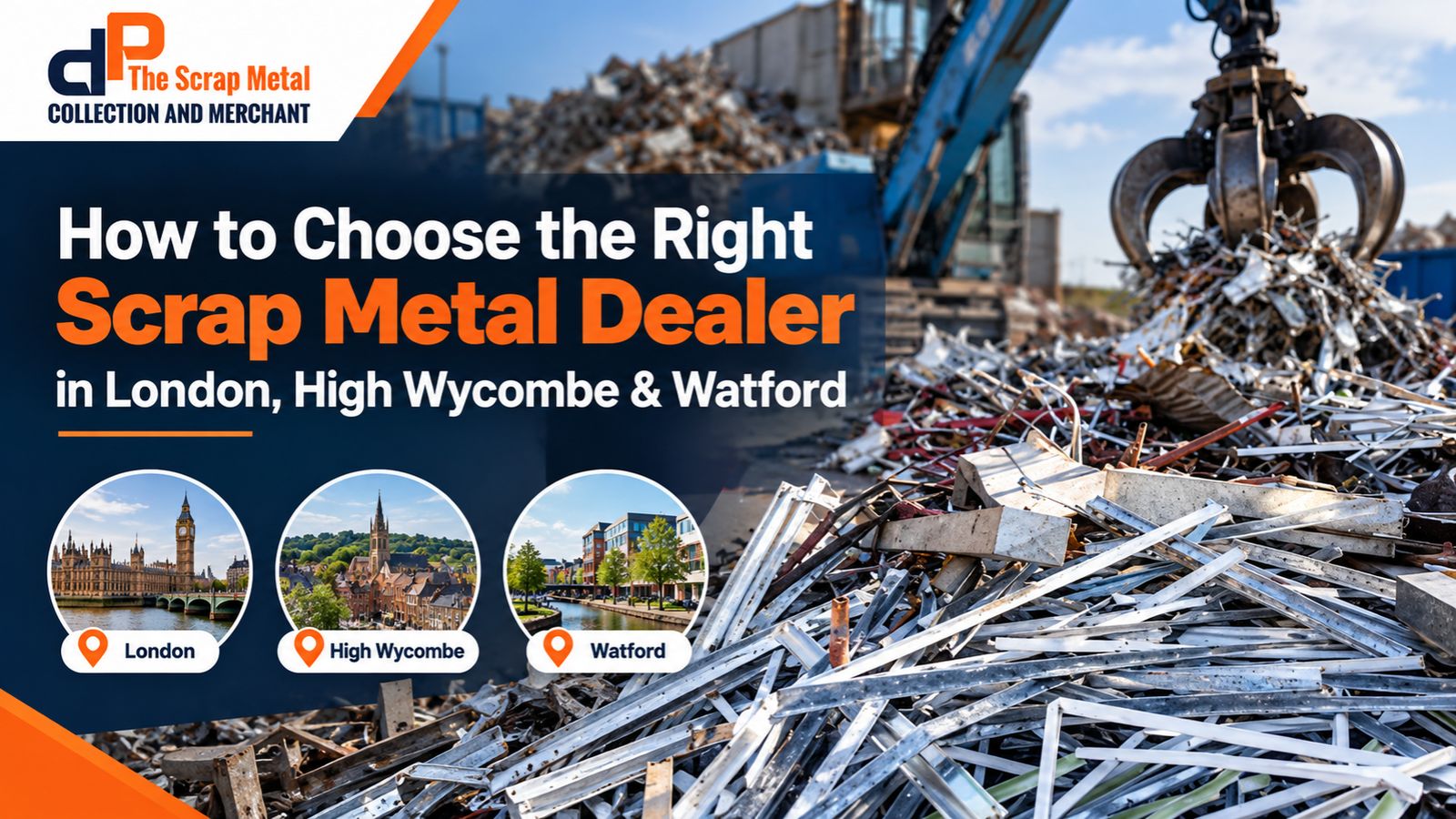
Choosing the right scrap metal dealer can make a real difference when clearing a property, managing construction waste or disposing of unwanted metal equipment. A reliable service should offer clear communication, transparent pricing, appropriate waste handling and a responsible approach to recycling. Whether you are a homeowner with old radiators, a tradesperson with leftover copper cable or a business clearing redundant machinery, understanding what to look for can help you avoid unnecessary costs and disposal problems. This guide explains how to compare a Scrap Metal Dealer in London, High Wycombe and Watford and make a well-informed decision.
Why Choosing a Scrap Metal Dealer Matters
Scrap metal is not simply unwanted material. Many items contain valuable metals that can be recovered and processed for further use. Copper pipes, aluminium frames, steel sections, brass fittings and certain metal components may all have recycling value, depending on their condition, composition and the facilities available to process them.
However, not every dealer offers the same service, pricing structure or collection arrangements. Some customers need to dispose of a few household items, while others may have a substantial quantity of metal from a commercial refurbishment or building project. Choosing a suitable dealer means considering the type and quantity of material, how it will be collected, the documentation required and what happens after it leaves your property.
For customers in London, High Wycombe and Watford, practical considerations such as access restrictions, parking, loading space and collection scheduling can also influence the decision. A little preparation helps make the process more straightforward.
What to Look for in a Licensed Scrap Metal Dealer
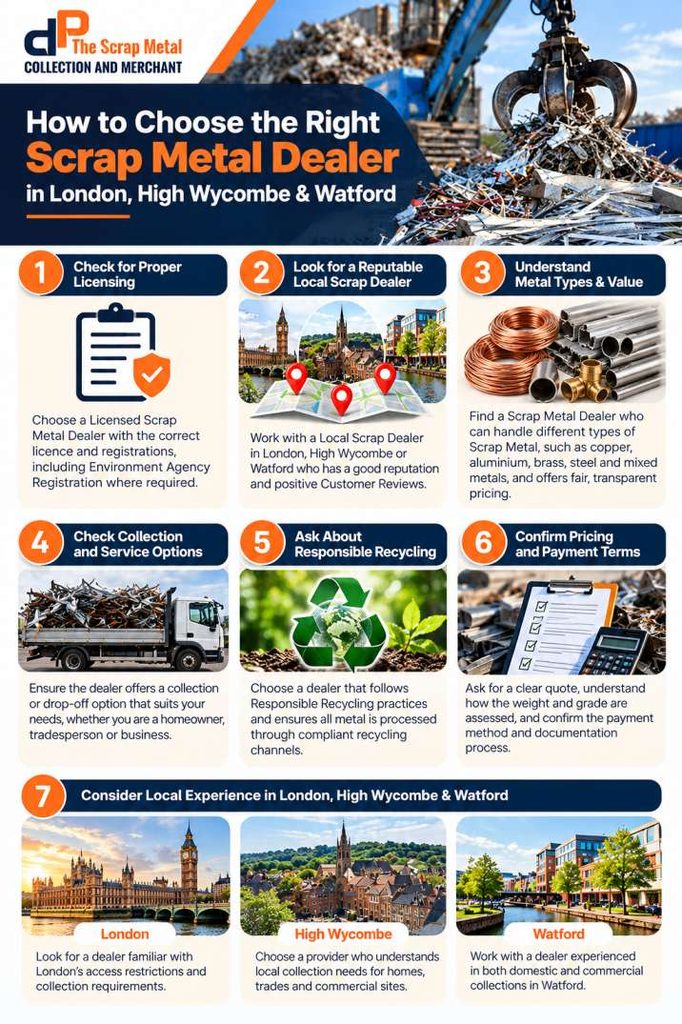
Before arranging a collection or delivering materials, check that the business has the relevant authorisations for its activities. In England and Wales, businesses operating as scrap metal dealers generally need a scrap metal dealer licence issued by the relevant local authority. The licence may be a site licence or a mobile collector’s licence, depending on how the business operates. The correct type and geographical scope matter, so do not assume that one licence automatically covers every activity or location.
A Licensed Scrap Metal Dealer should be able to explain its operating arrangements and the documentation it uses when accepting scrap. Customers can check relevant licensing information through the official public register and, where necessary, confirm details with the issuing council. This is particularly useful when comparing businesses that offer collections across several local authority areas.
Understand Environment Agency Registration
Scrap metal dealer licensing and waste registration are related but distinct requirements. Businesses that transport, buy, sell or arrange the disposal of controlled waste may also need to register as waste carriers, brokers or dealers, depending on their activities. Some waste-handling operations may require an environmental permit or a registered exemption as well. The applicable requirements depend on what the business actually does.
When checking a potential provider, ask which registrations or permissions apply to the collection and handling of your materials. This is more useful than relying on a vague claim that a business is simply “fully licensed”. The aim is to establish whether the operator is appropriately authorised for the particular service you require.
Is a Metal Merchant Licence the Same as a Scrap Metal Dealer Licence?
The phrase Metal Merchant Licence is sometimes used informally, but customers should verify the actual authorisation rather than rely on the wording alone. In England and Wales, the relevant scrap metal legislation provides for site licences and mobile collector’s licences. Waste carrier registration and environmental permits address separate regulatory requirements where applicable.
Ask for the exact licence or registration details and check that the business name and relevant activities match. This simple step helps distinguish between a general description of a business and the specific permissions required for its operations.
Compare Scrap Dealer Services in London, High Wycombe and Watford
A local Scrap Dealer may be convenient, but location alone should not determine your choice. Check whether the provider handles your particular metal types, accepts the quantity you have and offers a collection or drop-off arrangement that suits your circumstances. A small domestic clearance and a large commercial metal load can require very different equipment and planning.
London: Consider Access and Collection Logistics
London properties can present practical challenges, including restricted parking, narrow access routes, controlled loading areas and busy streets. If you need a collection from a flat, workshop, shop or construction site, explain the access conditions before booking. Provide details about where the metal is stored, whether stairs are involved and whether a vehicle can reach the loading point safely.
For commercial customers, arranging a suitable collection window can also help reduce disruption to staff, residents and other contractors. Ask whether the provider needs photographs or a description of the load in advance. Accurate information helps establish whether the proposed vehicle and collection arrangements are appropriate.
High Wycombe: Plan Around the Type and Quantity of Scrap
In High Wycombe, customers may have scrap from household renovations, workshops, property maintenance or building work. Separate materials where practical and identify anything that may contain mixed components. For example, a collection of steel brackets is easier to assess than a mixed load containing timber, plastic, electrical equipment and metal fittings.
Before agreeing to a collection, describe the approximate quantity and the main types of metal involved. If the load includes bulky machinery or heavy sections, explain this clearly. The provider can then assess the practical requirements and tell you whether the material is suitable for its service.
Watford: Check Commercial and Domestic Requirements
Customers in Watford may need to dispose of old radiators, metal shelving, aluminium frames, copper pipework or surplus materials from a refurbishment. Businesses should also consider how the collection fits into their site procedures, including safe access, loading arrangements and any records required for their waste management process.
If the metal comes from rented premises, a commercial site or a property being renovated, make sure you have permission to dispose of it. Keep any relevant project or ownership records, especially where the materials could be mistaken for items belonging to another party.
Understand Scrap Metal Types and Their Value
Not all scrap metal has the same market value. Prices can change with market conditions, metal grade, cleanliness, quantity and the costs involved in processing the material. A responsible dealer should explain how it assesses a load rather than offering a guaranteed price without enough information.
Copper, Brass and Aluminium
Copper is commonly found in pipes, cables and certain electrical components. Brass may appear in taps, valves and fittings, while aluminium is often used in window frames, doors and lightweight structures. Although these metals can have recycling value, their condition and composition influence how they are assessed.
Do not burn cable insulation or use unsafe methods to strip materials in an attempt to increase their value. Apart from creating health and fire risks, this can introduce contamination and cause avoidable environmental harm. Ask the dealer how the materials should be prepared before collection.
Steel, Iron and Mixed Scrap
Steel and iron are widely found in appliances, shelving, brackets, machinery and construction offcuts. They may be recyclable even when rusty or worn, but large items can require additional handling. Mixed scrap can also contain non-metal components that need separating before processing.
Describe the load honestly and ask whether non-metal attachments should be removed. Never dismantle pressurised equipment, electrical systems or machinery unless it is safe and you are suitably qualified. If an item contains batteries, fluids, refrigerants or other potentially hazardous components, disclose this before arranging disposal.
Ask for Transparent Pricing and Clear Collection Terms
A professional-looking quote is not enough on its own. Before accepting an offer, establish how the material will be assessed, whether the quoted amount is provisional and what could cause the final payment to change. Depending on the arrangement, the price may be based on weight, grade, quantity or a combination of factors.
For collection services, ask whether there are charges for loading, transport, difficult access, minimum quantities or non-metal waste. Clarify who is responsible for moving the material from its current position to the collection vehicle. These details are especially important when dealing with bulky items or metal stored inside a building.
Keep Payment and Records in Order
Scrap metal dealers in England and Wales must follow legal requirements concerning seller identification, record-keeping and payment methods. In particular, dealers must not pay for scrap metal in cash. Be cautious if a provider proposes cash payment for scrap, as this is inconsistent with the applicable rules.
Keep your collection confirmation, any written quotation and relevant transaction records. For businesses, this information can help maintain an accurate waste trail and support internal accounting or site records. If a quote or payment arrangement is unclear, ask for clarification before the metal is handed over.
Responsible Recycling and Waste Carrier Checks
Responsible Recycling means more than removing metal from a property. Materials should be handled through an appropriate waste management route, with recoverable metals directed towards suitable processing and other components managed according to their nature. This reduces the risk of avoidable waste, contamination and improper disposal.
A provider’s waste carrier status is one useful check, but it does not automatically prove that every waste activity it undertakes is authorised. Depending on the work, other permits, exemptions or arrangements may be required. Customers should verify the relevant registration and ask how the material will be managed after collection.
Prepare Metal for Collection Safely
A few practical steps can help the collection run smoothly:
- Separate obvious metal types where it is safe and practical to do so.
- Remove loose rubbish that is not part of the agreed load.
- Keep sharp edges, protruding pieces and unstable stacks away from walkways.
- Tell the provider about heavy items, restricted access and potential hazards.
- Do not cut, burn or dismantle equipment that may contain hazardous substances or stored energy.
You do not need to dismantle every item to prepare it for recycling. In many cases, leaving complex equipment intact and explaining what it is will be safer than attempting to separate its components yourself.
Use Customer Reviews to Compare Local Scrap Dealers
Customer Reviews can help you understand how a business communicates, handles bookings and resolves problems. Look for specific comments about punctuality, pricing clarity, collection arrangements and the way staff deal with changes. Detailed feedback is generally more useful than a collection of brief ratings with no explanation.
Read reviews in context. A complaint about a delayed collection may be relevant if your project has a tight deadline, while repeated comments about unclear pricing deserve closer attention. Equally, positive reviews should not replace checks on licensing, registration or the suitability of the proposed service.
Ask the provider practical questions before booking. Does it need photographs? What happens if the load differs from the original description? Will the collection be confirmed in writing? Clear answers can help you assess the service before committing.
Common Mistakes to Avoid When Choosing a Scrap Metal Dealer
One common mistake is choosing solely on the highest estimated price. An estimate may change after inspection if the load contains different grades, contamination or additional materials. Compare the assessment method and collection terms, not just the headline figure.
Another mistake is assuming every metal item can be accepted through the same service. Electrical equipment, batteries, vehicles, gas cylinders and machinery may require separate handling or additional controls. Explain what you have before collection rather than presenting unexpected items when the vehicle arrives.
Finally, do not overlook proof of ownership. Copper cable, architectural metal, vehicle components and other valuable materials can raise legitimate questions about where they came from. Scrap metal dealers have legal obligations to verify the identity and address of people from whom they receive scrap. Be prepared to provide the requested information and do not offer materials that you do not have the right to dispose of.
Choosing a Scrap Metal Dealer: A Practical Checklist
Before confirming your booking, review the following points:
- Authorisation: Check the relevant scrap metal dealer licence and any waste registration or permit applicable to the service.
- Material acceptance: Confirm that the provider can handle your metal types and the quantity involved.
- Pricing: Ask how the material will be assessed and whether any collection or handling charges apply.
- Collection arrangements: Explain access restrictions, loading conditions and any bulky or unusually heavy items.
- Documentation: Keep the quote, booking confirmation and transaction records.
- Responsible handling: Ask how the materials will be managed and whether any components need separate treatment.
- Customer feedback: Read relevant reviews and look for consistent information about communication and reliability.
Following this checklist helps you compare providers on practical, legal and environmental considerations rather than price alone.
How DP The Scrap Metal Collection and Merchant Can Fit Your Decision
When comparing options for scrap metal collection in London, High Wycombe and Watford, DP The Scrap Metal Collection and Merchant is a business you can consider as part of your research. Describe the metal you have, its approximate quantity and where it is located so that the suitability of the required collection can be discussed clearly. Before making arrangements, confirm the service available for your specific materials, the collection terms and any applicable charges.
A well-planned collection begins with accurate information and realistic expectations. DP The Scrap Metal Collection and Merchant can be approached to discuss your scrap metal requirements and establish what arrangements may be suitable. As with any provider, check the relevant licensing and registration details, clarify the quotation and ensure you understand the handling process before proceeding. Making these checks supports a more informed choice and helps ensure scrap metal is managed responsibly.
Frequently Asked Questions
1. How do I check whether a Scrap Metal Dealer is licensed?
Ask for the business’s scrap metal dealer licence details and establish whether it holds a site licence or mobile collector’s licence, as applicable. You can check the relevant public register and contact the issuing local authority if anything is unclear. If the provider transports or otherwise deals in controlled waste, ask about any required waste carrier, broker or dealer registration as well. These checks should relate to the actual business and service you intend to use.
2. Do I need to pay to have scrap metal collected?
The cost depends on the material, quantity, location, access and the service arrangement. Some metal may have a recoverable value, while other loads may involve transport or handling costs that affect the overall offer. Ask for a clear explanation of the pricing method and whether the initial quote is provisional. If your load contains mixed waste or bulky equipment, describe it accurately before booking so that the provider can assess the likely requirements.
3. Which types of metal can usually be recycled?
Common recyclable metals include copper, brass, aluminium, steel and iron. They can be found in pipes, frames, fittings, shelving, machinery and construction offcuts. Acceptance depends on the dealer’s facilities and the condition of the material. Items containing electrical components, batteries, oils, refrigerants or other hazardous substances may need separate handling. Provide a clear description and ask how to prepare the items safely rather than dismantling complex equipment yourself.
4. Why is Environment Agency registration important?
Registration helps establish whether a business is authorised for relevant waste-related activities, such as transporting, buying, selling or brokering controlled waste. However, registration is not a blanket approval for every type of waste operation. Certain activities may also require an environmental permit or a registered exemption. Customers should check the requirements relevant to the proposed service and verify the provider’s details rather than relying on a general claim of compliance.
5. What should I prepare before booking a scrap metal collection?
Prepare a description of the metal types, approximate quantity, collection address and access conditions. Photographs can help communicate the size and condition of a load, especially when it includes large machinery or mixed materials. Explain whether the items are indoors, upstairs, in a restricted loading area or difficult to move. Keep relevant proof of ownership and booking records available, and confirm the final pricing arrangements and payment method before handing over the scrap.


